

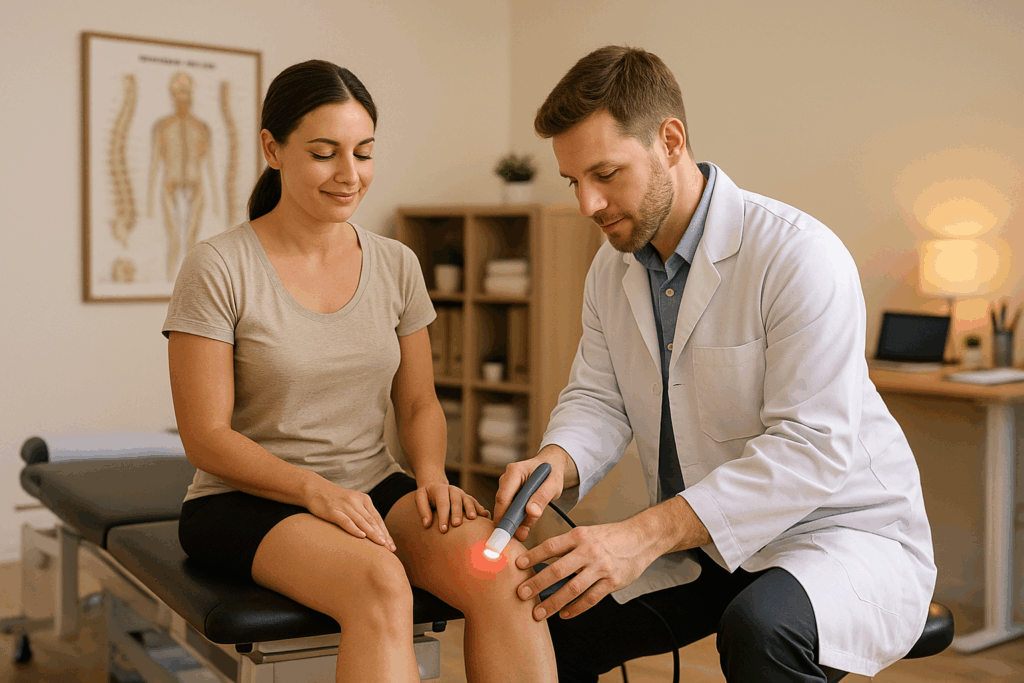
Joint pain and inflammation can be deeply disruptive—making it difficult to work, exercise, sleep, or enjoy everyday activities. Whether the cause is arthritis, overuse, sports injuries, or age-related wear, many patients are searching for a treatment that not only eases pain but also helps the body truly heal. In chiropractic and functional medicine settings, one of the most effective and increasingly popular tools is class IV laser therapy, also known as photobiomodulation (PBM).
Laser therapy has moved far beyond being an alternative modality. With strong research support, sophisticated technology, and growing success in both clinical and athletic environments, it has become a core option for patients seeking powerful, non-invasive relief. Below, we break down exactly how laser therapy works, why it excels at reducing joint pain and inflammation, and how it can fit naturally into your overall chiropractic care plan.
What Is Laser Therapy?
Laser therapy is a non-invasive treatment that uses specific wavelengths of light to stimulate cellular function and support tissue repair. In chiropractic settings, the most commonly used device is the Class IV therapeutic laser—a high-powered laser that penetrates deeper into muscles, ligaments, cartilage, and joint capsules compared to lower-level (cold) lasers.
This targeted light energy helps improve circulation, reduce inflammation, and accelerate healing at the cellular level without heat damage or tissue disruption. Sessions are quick, comfortable, and completely drug-free, making them a great option for patients seeking natural pain relief.
How Laser Therapy Works: The Science Behind the Relief
Laser therapy stimulates biological processes that directly combat pain and inflammation. The effects can be organized into four major mechanisms:
1. Increased Cellular Energy (ATP Production)
Laser light interacts with mitochondria, the energy powerhouses of your cells. When light photons reach these organelles, they help increase the production of ATP, the molecule responsible for cellular energy.
More ATP = faster healing, improved tissue repair, and stronger resilience in injured or inflamed tissues.
2. Improved Blood Flow and Oxygen Delivery
Laser therapy triggers vasodilation—widening of blood vessels—and encourages new capillary formation. This increases oxygen supply while helping flush metabolic waste out of the affected area. For inflamed joints, improved circulation is essential to restoring normal function and reducing stiffness.
3. Reduced Inflammation and Swelling
Laser therapy lowers inflammatory markers by:
-
Reducing pro-inflammatory cytokines
-
Increasing anti-inflammatory cytokines
-
Stabilizing cell membranes
-
Enhancing lymphatic drainage
This results in noticeably decreased swelling, tenderness, and joint stiffness.
4. Immediate and Long-Term Pain Reduction
Laser therapy reduces pain by:
-
Stimulating endorphin release
-
Blocking pain signals transmitted through nerves
-
Reducing muscle tension around the joint
Many patients feel relief during or immediately after the first session, with cumulative improvements over a treatment plan.
Conditions Laser Therapy Helps Most
Laser therapy is versatile and effective for a broad range of joint-related conditions. It is especially powerful in cases where inflammation is the primary driver of pain.
Arthritis (Osteoarthritis & Rheumatoid Arthritis)
Laser therapy is strongly supported in research for reducing arthritic pain, swelling, and joint stiffness. By improving circulation, decreasing inflammatory chemicals, and supporting cartilage and soft-tissue repair, laser therapy helps restore joint mobility and comfort.
Sports Injuries
Athletes value laser therapy for its ability to accelerate recovery from:
-
Tendonitis
-
Sprains and strains
-
Joint capsule irritation
-
Overuse injuries
Laser therapy is also safe to use alongside rehabilitation exercises and manual therapy.
Degenerative Joint Conditions
Patients experiencing chronic knee pain, hip pain, spinal degeneration, or shoulder wear-and-tear often find that laser therapy offers substantial relief and helps maintain joint function without relying on medications.
Post-Surgical or Post-Injury Recovery
Laser therapy encourages rapid tissue repair, making it an excellent addition to recovery after surgery or acute injury. Its ability to reduce scar tissue formation is especially beneficial for joints that rely on smooth, unrestricted movement.
Bursitis and Tendonitis
Inflamed bursae and irritated tendons respond quickly to photobiomodulation because of its strong anti-inflammatory effect and ability to calm irritated tissues.
Why Laser Therapy Works So Well for Joints
Joint tissue—especially cartilage, ligaments, and capsules—receives limited blood flow. This means healing happens slowly. Laser therapy provides the exact stimulation needed to overcome this natural limitation by:
-
Increasing microcirculation deep inside the joint
-
Enhancing lymphatic drainage
-
Improving synovial fluid production
-
Supporting collagen repair
-
Accelerating cartilage cell activity
Patients with chronic joint issues often notice not only less pain but also improved range of motion, smoother movement, and faster recovery after activity.
What to Expect During a Laser Therapy Session
A typical treatment is fast, comfortable, and non-invasive.
During the Session
-
You’ll sit or lie comfortably while the chiropractor or trained provider directs the laser over the affected joint.
-
You will feel gentle warmth as the therapy works, but it should never be uncomfortable or painful.
-
Sessions typically last 5–10 minutes per area.
After the Session
Most patients feel:
-
Less pain
-
Reduced stiffness
-
Improved mobility
-
A sense of relaxation in the treated area
There is no downtime, and you can return to normal activity immediately.
How Many Sessions Are Needed?
Laser therapy is cumulative, meaning each session builds on the last. Most treatment plans include:
-
Acute injuries: 4–6 sessions
-
Chronic joint pain: 6–12 sessions
-
Severe or long-standing degeneration: ongoing maintenance every few weeks
Your chiropractor will tailor the frequency to your condition, goals, and response.
Laser Therapy + Chiropractic Care: A Powerful Combination
Laser therapy is most effective when paired with a comprehensive chiropractic approach. At our clinic, we often combine it with:
Manual Adjustments
Restoring proper joint motion enhances circulation and reduces mechanical stress, making laser therapy more effective.
Active Release Technique (ART) or Soft-Tissue Work
Releasing muscle tension and improving fascial glide allows laser light to penetrate deeper and heal underlying structures more efficiently.
Corrective Exercise
Rehab exercises strengthen the surrounding muscles, stabilize the joint, and help maintain long-term improvements from laser therapy.
Functional Medicine Support
Nutrition, inflammation-lowering lifestyle habits, and peptide support (when clinically indicated) can complement tissue healing and decrease systemic inflammation.
This multimodal strategy works incredibly well for active adults, athletes, older adults with arthritis, and those looking to avoid pain medications or invasive procedures.
Benefits Patients Notice Most
Patients consistently report the following improvements:
✔ Reduced joint pain
✔ Less inflammation and swelling
✔ Improved mobility and flexibility
✔ Faster recovery from activity or injury
✔ Improved ability to exercise
✔ Less reliance on pain medication
✔ Enhanced overall quality of life
These benefits often begin within a few sessions and continue to build as the treatment plan progresses.
Is Laser Therapy Safe?
Yes. Laser therapy is FDA-cleared, non-invasive, and safe for most patients when performed by trained providers. There is no radiation, no invasive technique, and no medication involved. Protective eyewear is used during treatment to shield your eyes from the laser light.
Laser therapy is avoided in certain conditions such as active cancer or pregnancy over the abdomen, but your provider will review your health history to ensure appropriate use.
Who Makes a Good Candidate?
Laser therapy is ideal for patients who:
-
Suffer from chronic joint pain
-
Experience recurring inflammation
-
Want to avoid or reduce medication use
-
Have not found relief from other treatments
-
Are recovering from injury or surgery
-
Participate in repetitive sports or high-intensity activity
Because laser therapy accelerates healing and reduces inflammation naturally, it is a great option for patients of all ages and activity levels.
When to Consider Laser Therapy for Joint Pain
You should consider laser therapy if you are dealing with:
-
Joint pain that isn’t resolving
-
Morning stiffness
-
Swelling around a joint
-
Pain that worsens with activity
-
Slow recovery after workouts
-
Arthritis or degeneration
-
Tendon or ligament irritation
If joint pain is limiting your mobility or preventing you from being active, laser therapy may be the breakthrough treatment you’ve been looking for.
Final Thoughts
Laser therapy is one of the most effective, research-supported treatments for joint pain and inflammation available today. It helps your body heal at the cellular level while reducing discomfort quickly and naturally. For patients seeking long-term relief without medications or invasive procedures, laser therapy offers a powerful solution—especially when combined with chiropractic adjustments, soft-tissue therapy, and rehabilitative exercise.
If you’re ready to restore movement, reduce inflammation, and feel your best again, our clinic offers advanced Class IV laser therapy as part of a personalized care plan. Joint pain doesn’t have to limit your life—healing starts with the right treatment strategy.